


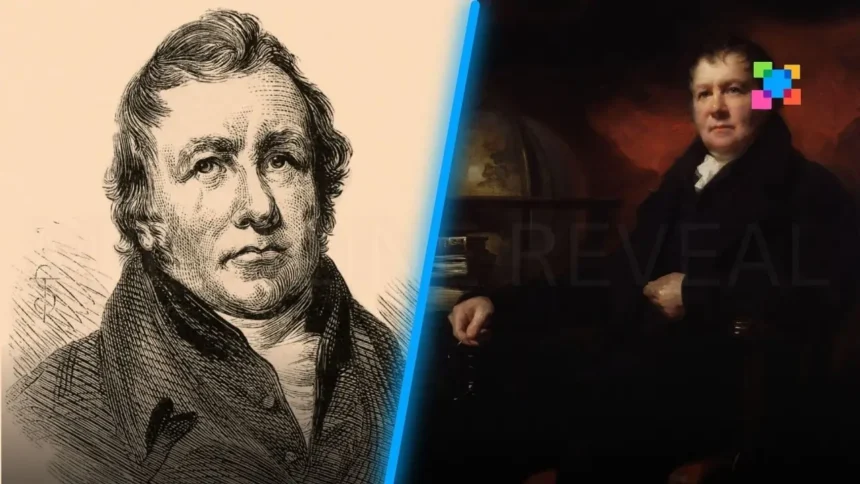
John Playfair was a Scottish mathematician, geologist, and natural philosopher who played a crucial role in explaining and popularizing the groundbreaking geological ideas of James Hutton. During the late eighteenth and early nineteenth centuries, scientific understanding of the Earth began to change dramatically. Many scientists still believed that the planet’s surface formed quickly through sudden events. Playfair helped introduce a different perspective by presenting Hutton’s theory in a clear and logical way. His work allowed scholars, students, and scientists to understand complex geological ideas that had previously been difficult to interpret.
Playfair’s contributions extended beyond geology. He also earned recognition as an accomplished mathematician and professor at the University of Edinburgh. His ability to communicate complex scientific ideas with clarity made him one of the most respected intellectual figures of the Scottish Enlightenment. Through lectures, books, and essays, he influenced generations of scientists and scholars. Today, historians of science recognize Playfair not only as an interpreter of Hutton’s theory but also as a key contributor to the development of modern Earth science and scientific communication.
Quick Bio John Playfair
| Field | Details |
|---|---|
| Full Name | John Playfair |
| Birth Date | 10 March 1748 |
| Birthplace | Benvie, near Dundee, Scotland |
| Nationality | Scottish |
| Profession | Mathematician, Geologist, Natural Philosopher |
| Famous For | Explaining and popularizing James Hutton’s Theory of the Earth |
| Known As | One of the key interpreters of early geological science |
| Father | Rev. James Playfair (Church minister) |
| Mother | Margaret Young |
| Education | University of St Andrews |
| Academic Fields | Mathematics, Physics, Geology |
| First Academic Role | Tutor and assistant in mathematics |
| Major Position | Professor of Mathematics at the University of Edinburgh |
| Later Position | Professor of Natural Philosophy at the University of Edinburgh |
| Scientific Movement | Scottish Enlightenment |
| Famous Association | James Hutton |
| Key Contribution | Simplified and clarified Hutton’s geological theories |
| Important Book | Illustrations of the Huttonian Theory of the Earth (1802) |
| Other Works | Essays on geology, mathematics, and physical science |
| Scientific Interests | Earth science, mathematics, astronomy, physics |
| Known For in Geology | Promoting uniformitarianism in geology |
| Scientific Philosophy | Believed natural processes shape the Earth over long periods |
| Memberships | Royal Society of Edinburgh |
| Influence | Helped establish geology as a scientific discipline |
| Teaching Career | Taught and mentored many future scientists |
| Active Years | Late 18th century – early 19th century |
| Death Date | 20 July 1819 |
| Age at Death | 71 years |
| Place of Death | Edinburgh, Scotland |
| Burial Place | Old Calton Burial Ground, Edinburgh |
| Historical Era | Scottish Enlightenment |
| Legacy | Remembered as a major communicator of geological science |
| Modern Recognition | Considered a foundational figure in early geology |
Early Life and Family Background
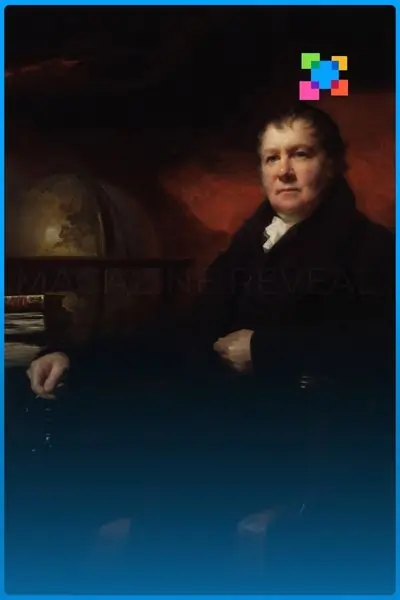
John Playfair was born on March 10, 1748, in Benvie, a small parish near Dundee in Scotland. His father, Reverend James Playfair, served as a minister in the Church of Scotland and strongly valued education and intellectual development. Growing up in a household that emphasized learning and discipline, young John developed an early interest in mathematics and science. His father recognized his son’s exceptional abilities and encouraged him to pursue advanced studies. This supportive family environment helped shape Playfair’s academic curiosity and prepared him for a future career in scholarship.
The cultural environment of Scotland during Playfair’s childhood also played a significant role in shaping his intellectual growth. The Scottish Enlightenment was flourishing, and universities across the country promoted new ideas in philosophy, science, and literature. Surrounded by a culture that valued critical thinking and academic achievement, Playfair absorbed the intellectual energy of the time. His upbringing combined religious discipline, scholarly encouragement, and exposure to progressive ideas, all of which contributed to his later achievements in mathematics and geology.
Education and Academic Development
John Playfair began his formal education at the University of St Andrews when he was only fourteen years old. At the time, Scottish universities encouraged talented students to pursue higher education early, and Playfair quickly demonstrated exceptional mathematical ability. His professors recognized his analytical thinking and dedication to academic study. During his university years, he developed a strong foundation in mathematics, natural philosophy, and classical studies. These subjects formed the intellectual framework that later supported his contributions to geology and scientific explanation.
After completing his studies, Playfair continued to deepen his knowledge through independent research and scholarly interaction with other intellectual figures. He studied mathematics extensively while also exploring the natural sciences. This interdisciplinary approach allowed him to understand complex scientific theories and explain them clearly to others. Playfair’s early academic development reflects the educational philosophy of the Scottish Enlightenment, which encouraged curiosity, reason, and the integration of knowledge across different fields of study.
Career as a Mathematician and Professor
John Playfair began his professional career in academia by assisting with mathematical instruction and research. His strong reputation as a mathematician eventually led to his appointment as Professor of Mathematics at the University of Edinburgh in 1785. In this role, he taught students advanced mathematical concepts while continuing his own research. Playfair’s lectures were known for their clarity and logical structure, making difficult subjects easier for students to understand. His teaching style emphasized reasoning and conceptual understanding rather than memorization.
Later in his career, Playfair transitioned to the position of Professor of Natural Philosophy at the same university. This role allowed him to explore broader scientific topics, including physics, astronomy, and geology. His interdisciplinary knowledge helped him bridge different scientific fields and communicate complex ideas effectively. Through his academic career, Playfair gained recognition as one of the most respected scholars of his time. His influence extended beyond the classroom, shaping scientific thinking across Britain and Europe.
Friendship with James Hutton
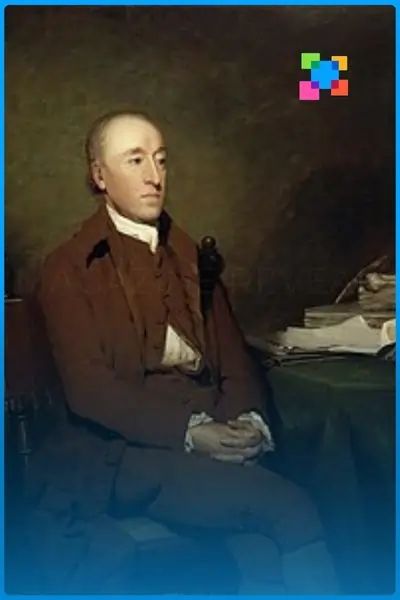
One of the most important relationships in John Playfair’s scientific life was his friendship with James Hutton, a Scottish geologist widely regarded as the father of modern geology. Hutton developed revolutionary ideas about how the Earth formed and changed over long periods of time. However, his original writings were complex and difficult for many readers to understand. Playfair recognized the importance of Hutton’s ideas and decided to help present them in a clearer and more accessible manner.
Playfair and Hutton shared a deep intellectual bond rooted in curiosity and scientific exploration. Their discussions often revolved around geological observations, natural processes, and the age of the Earth. Playfair admired Hutton’s innovative thinking and believed that his theories deserved greater recognition. By studying Hutton’s work carefully, Playfair prepared himself to explain these groundbreaking ideas to a broader audience. This collaboration between the two scientists played a vital role in shaping the early development of geological science.
Explaining Hutton’s Theory of the Earth
James Hutton proposed a revolutionary concept known as the Theory of the Earth, which suggested that geological processes such as erosion, sedimentation, and volcanic activity occur gradually over immense periods of time. This idea challenged traditional beliefs that Earth’s features formed rapidly through catastrophic events. Although Hutton’s theory contained profound insights, his writing style made it difficult for many readers to follow. John Playfair recognized this challenge and took on the task of explaining the theory in a more understandable form.
In 1802, Playfair published Illustrations of the Huttonian Theory of the Earth, a book that clarified Hutton’s ideas and presented them in a logical and accessible manner. Playfair’s explanation helped scientists, students, and educated readers grasp the significance of uniform geological processes shaping the planet. His work effectively introduced Hutton’s concepts to the broader scientific community and ensured that these ideas gained lasting influence. Today, Playfair’s book remains one of the most important interpretations of early geological theory.
Contributions to Geology and Science
John Playfair made significant contributions to geology by helping transform complex scientific observations into understandable explanations. At a time when geology was still developing as a formal discipline, many scientists struggled to explain how Earth’s landscapes formed. Playfair’s ability to analyze geological processes and present them clearly helped strengthen scientific discussions about the planet’s history. By studying erosion, sediment formation, and the gradual shaping of landforms, he supported the idea that Earth changes slowly over long periods. This approach encouraged scientists to observe nature carefully and draw conclusions based on evidence rather than speculation.
Beyond geology, Playfair also contributed to mathematics and natural philosophy. His academic work included lectures and writings that helped students understand advanced mathematical concepts. He believed that science should rely on observation, logical reasoning, and experimentation. This philosophy aligned with the broader intellectual movement of the Scottish Enlightenment. Playfair’s contributions therefore extended across several scientific fields, demonstrating his ability to integrate knowledge and communicate ideas effectively. His work helped strengthen the foundation of modern scientific thinking during an important period of intellectual development.
Major Publications and Books
One of John Playfair’s most influential works is Illustrations of the Huttonian Theory of the Earth, published in 1802. This book provided a clear explanation of James Hutton’s geological ideas, which had previously been difficult for many readers to understand. Playfair organized the theory logically and explained how natural processes such as erosion, sediment deposition, and volcanic activity continuously shape Earth’s surface. By presenting these ideas in a structured and readable format, he made Hutton’s revolutionary theory accessible to scientists, scholars, and educated readers across Europe.
In addition to this famous book, Playfair wrote numerous essays and academic papers on mathematics, geology, and physics. His writings appeared in scientific journals and scholarly publications that circulated among intellectual communities of the time. Playfair’s style emphasized clarity, logical argument, and careful observation of natural phenomena. These qualities made his work highly respected among scholars. Through his publications, Playfair not only advanced scientific knowledge but also demonstrated how clear communication can help complex ideas reach a broader audience.
Role in the Scottish Enlightenment
The Scottish Enlightenment was a remarkable intellectual movement that flourished during the eighteenth century. It encouraged critical thinking, scientific inquiry, and philosophical debate. John Playfair became an important participant in this movement through his academic work and intellectual collaborations. Universities, discussion societies, and scientific organizations provided spaces where scholars exchanged ideas and challenged traditional beliefs. Playfair actively engaged in these environments, contributing to conversations about science, mathematics, and the natural world.
Playfair’s involvement in the Scottish Enlightenment connected him with many influential thinkers of the time. Scholars across disciplines worked together to expand human knowledge and promote rational understanding of nature. Playfair’s lectures and writings reflected this intellectual spirit. He believed that science should improve society by encouraging curiosity and evidence-based reasoning. His work in geology and mathematics exemplified the Enlightenment’s emphasis on observation and logical analysis. Through these contributions, Playfair helped strengthen Scotland’s reputation as a center of intellectual innovation.
Scientific Philosophy and Ideas
John Playfair believed that scientific knowledge should develop through observation, reasoning, and careful interpretation of evidence. Rather than accepting traditional explanations without question, he encouraged scholars to examine natural processes directly. His approach reflected the Enlightenment belief that humans can understand the world through rational inquiry. Playfair emphasized that scientists should observe patterns in nature, analyze data, and draw conclusions supported by evidence. This philosophy guided his work in both mathematics and geology.
Playfair also supported the idea that Earth’s features formed gradually through continuous natural processes. By explaining Hutton’s geological theory, he helped introduce the concept of uniformitarianism, which suggests that the same processes shaping Earth today have operated throughout history. This perspective changed how scientists interpreted landscapes, mountains, and rivers. Instead of attributing geological formations to sudden catastrophic events, researchers began studying slow and measurable changes over time. Playfair’s scientific philosophy therefore helped reshape scientific understanding of the Earth’s history.
Influence on Modern Geology
John Playfair’s work played a crucial role in establishing geology as a scientific discipline. By presenting Hutton’s theory clearly and logically, he helped scientists appreciate the significance of gradual geological processes. His explanations encouraged researchers to examine rock formations, river valleys, and coastal landscapes with greater attention to detail. As a result, geological observation became more systematic and evidence-based. This shift helped transform geology from speculative theory into a field grounded in scientific investigation.
Modern geologists continue to recognize Playfair’s influence because his writings helped spread foundational ideas about Earth’s development. Concepts such as erosion, sedimentation, and long geological timescales remain central to contemporary Earth science. By explaining these ideas effectively, Playfair ensured that they reached a wider audience and gained acceptance within the scientific community. His work therefore represents a bridge between early geological theory and the modern scientific study of the Earth.
Later Life and Final Years
In the later years of his career, John Playfair continued teaching and writing while maintaining his reputation as one of Scotland’s most respected scholars. His role as Professor of Natural Philosophy at the University of Edinburgh allowed him to engage with a wide range of scientific subjects, including physics, astronomy, and geology. Students admired his lectures because he explained complex scientific principles in a clear and organized manner. Even as new scientific discoveries emerged, Playfair remained committed to encouraging careful observation and logical reasoning. His dedication to education helped strengthen the university’s reputation as a center of intellectual excellence.
During his later life, Playfair also participated in several scientific societies and intellectual gatherings. These meetings allowed scholars to exchange ideas and discuss developments in science and philosophy. Despite the growing responsibilities of his academic career, Playfair continued researching geological phenomena and promoting the ideas of James Hutton. His work ensured that Hutton’s revolutionary theory remained part of ongoing scientific discussions. By the time he reached his later years, Playfair had become widely respected not only as a scientist but also as a thoughtful communicator of complex ideas.
John Playfair’s Death and Legacy
John Playfair passed away on July 20, 1819, in Edinburgh, Scotland, at the age of seventy-one. His death marked the loss of a significant intellectual figure who had helped shape scientific understanding during a transformative period in European history. Scholars, students, and fellow scientists recognized his contributions to mathematics and geology, particularly his efforts to explain and promote Hutton’s theory of the Earth. His passing prompted reflections on his influence as both a teacher and a scientific thinker.
Playfair’s legacy remains closely connected to the development of modern geology. By clarifying Hutton’s ideas and presenting them to the scientific community, he ensured that these concepts would continue influencing future generations of researchers. Many historians of science consider Playfair a bridge between early geological thought and the more advanced theories that emerged in the nineteenth century. His work helped establish the importance of long geological timescales and gradual natural processes in shaping Earth’s surface.
Honors, Recognition, and Historical Importance
During his lifetime, John Playfair received recognition from several academic and scientific organizations. He became a member of the Royal Society of Edinburgh, an institution dedicated to advancing knowledge and scientific research. Membership in such societies allowed him to collaborate with other scholars and share his ideas within the broader intellectual community. His academic achievements also earned him respect among European scientists who followed developments in geology and mathematics.
Modern historians continue to recognize Playfair’s importance in the history of science. His writings demonstrate how clear explanation and logical organization can help revolutionary ideas gain acceptance. Without Playfair’s interpretation of Hutton’s work, many scientists might have overlooked or misunderstood the theory of gradual geological change. Today, geology textbooks and academic studies frequently reference both Hutton and Playfair when discussing the origins of modern Earth science. Their combined contributions helped transform geology into a systematic scientific discipline.
Personal Character and Intellectual Influence
John Playfair’s personality reflected the intellectual ideals of the Scottish Enlightenment. Colleagues described him as thoughtful, patient, and dedicated to the pursuit of knowledge. He approached scientific questions with curiosity and openness, encouraging discussion rather than rigid debate. This attitude made him an effective teacher and collaborator. Students appreciated his ability to explain difficult concepts in ways that inspired curiosity and deeper understanding.
Playfair also valued the importance of communication in science. He believed that scientific discoveries should reach a wider audience instead of remaining hidden within technical texts. His writings demonstrate this philosophy by presenting complex ideas in language that educated readers could understand. This commitment to clear explanation helped expand public interest in scientific topics during his lifetime. Through both his personality and his scholarship, Playfair influenced how scientists communicate knowledge to future generations.
Conclusion
John Playfair stands as one of the most important scientific communicators of the Scottish Enlightenment. As a mathematician, geologist, and professor, he dedicated his career to advancing knowledge and helping others understand complex scientific ideas. His most significant achievement involved explaining and promoting James Hutton’s Theory of the Earth. By presenting Hutton’s concepts in a clear and logical manner, Playfair allowed scholars and scientists to appreciate the revolutionary idea that Earth’s landscape forms through gradual processes over immense periods of time.
Today, historians of science continue to recognize Playfair’s contributions to geology and education. His work helped transform early geological speculation into a more systematic and evidence-based scientific discipline. Through teaching, writing, and intellectual collaboration, he influenced generations of students and researchers. John Playfair’s legacy reminds us that scientific progress often depends not only on discovery but also on the ability to communicate ideas clearly and effectively.
Frequently Asked Questions
Who was John Playfair?
John Playfair was a Scottish mathematician, geologist, and natural philosopher known for explaining and promoting James Hutton’s Theory of the Earth.
When was John Playfair born?
He was born on 10 March 1748 in Benvie near Dundee, Scotland.
What is John Playfair famous for?
Playfair is famous for writing Illustrations of the Huttonian Theory of the Earth (1802), which explained Hutton’s geological theory in a clear and accessible way.
What did John Playfair contribute to geology?
He helped popularize the concept that Earth’s landscape forms gradually through natural processes such as erosion and sedimentation over long periods of time.
Where did John Playfair teach?
He served as a professor at the University of Edinburgh, teaching mathematics and later natural philosophy.
When did John Playfair die?
John Playfair died on 20 July 1819 in Edinburgh, Scotland.
VISIT MORE: MAGAZINE REVEAL