



The Houston Texans narrowly defeated the Los Angeles Chargers 20-16 on 27 Dec 2025, in a game that showcased both teams’ offensive and defensive strengths. Houston jumped to an early lead with consistent scoring in the first half, while the Chargers struggled to respond until the third quarter. Each team’s strategy, execution, and adaptation throughout the four quarters played a significant role in shaping the outcome. The match was closely contested, with critical plays influencing momentum and highlighting key players from both sides. Fans witnessed a blend of tactical offense and disciplined defense.
Houston’s ability to capitalize on early opportunities, particularly through effective rushing and controlled passing, contrasted with the Chargers’ reliance on late-game adjustments. The Texans’ defensive strategy also prevented the Chargers from converting several red-zone chances. Although the Chargers made attempts to regain momentum in the second half, Houston’s consistency and timely execution proved decisive. This game added important implications for playoff positioning and team morale, demonstrating both resilience and adaptability in high-pressure situations.
Quick Score Table
| Team | Q1 | Q2 | Q3 | Q4 | Final |
|---|---|---|---|---|---|
| Houston Texans | 14 | 0 | 3 | 3 | 20 |
| Los Angeles Chargers | 0 | 3 | 7 | 6 | 16 |
The Texans established a strong early lead, scoring 14 points in the first quarter. Their ability to sustain drives and capitalize on Chargers’ defensive gaps provided a crucial advantage. The Chargers responded slowly, with a field goal in the second quarter. Momentum remained in Houston’s favor through halftime.
In the second half, the Chargers increased scoring output, adding 13 points across Q3 and Q4. Despite their rally, Houston maintained composure, scoring through controlled drives and exploiting key mistakes. Each quarter reflected strategic adjustments by both teams, particularly in red-zone execution and defensive schemes. The final score mirrored the competitive balance, with Houston’s early advantage ultimately securing the win.
Quick Match Stats Table
| Category | Houston Texans | Los Angeles Chargers |
|---|---|---|
| 1st downs from penalties | 3 | 3 |
| 3rd down efficiency | 3-11 | 6-15 |
| Total Plays | 62 | 59 |
| Total Yards | 362 | 275 |
| Total Drives | 13 | 12 |
| Yards per Play | 5.8 | 4.7 |
| Passing | 244 | 201 |
| Comp/Att | 16/28 | 21/32 |
| Yards per pass | 8.7 | 5.4 |
| Interceptions thrown | 2 | 1 |
| Sacks-Yards Lost | 0-0 | 5-35 |
| Rushing | 118 | 74 |
| Rushing Attempts | 34 | 22 |
| Yards per rush | 3.5 | 3.4 |
| Red Zone (Made-Att) | 0-0 | 2-5 |
| Penalties | 8-70 | 3-25 |
| Turnovers | 2 | 1 |
| Interceptions thrown | 2 | 1 |
| Possession | 30:21 | 29:39 |
Key Moments and Game Summary
The Texans’ early dominance came in the first quarter, scoring 14 points while holding the Chargers scoreless. Houston capitalized on successful drives, including an effective mix of passing and rushing plays. The Chargers struggled with turnovers and inefficient red-zone attempts, leaving them trailing. As the game progressed, both teams displayed strategic adjustments: Houston’s defense intensified, while Los Angeles sought to exploit gaps in coverage and rushing lanes. Each momentum swing was met with tactical responses, emphasizing the game’s competitive nature.
The third quarter saw the Chargers finally respond, putting 16 points on the board. Despite this, the Texans’ defense held strong, preventing further scoring. Key plays included critical third-down conversions, sacks, and rushing stops, shaping the narrative of a tightly contested match. The fourth quarter highlighted Houston’s ball control and time management, ensuring they maintained the lead. Special teams remained consistent for both sides, but turnovers and penalties ultimately influenced the final outcome. The game exemplified how small execution details can determine victory in high-level matchups.
Houston Texans Performance Analysis
Houston’s offensive line allowed effective rushing and passing, contributing to a total of 362 yards on 62 plays. Quarterback performance, supported by a disciplined rushing attack, ensured consistent advancement of the ball. Texans’ rushing game accounted for 118 yards over 34 attempts, demonstrating strong line blocking and strategic play calling. Their passing game, completing 16 of 28 attempts for 244 yards, enabled precise targeting of receivers in high-pressure situations, creating sustained drives and scoring opportunities.
Defensively, the Texans excelled in limiting the Chargers’ total yardage to 275 over 59 plays. Their ability to force incomplete passes and disrupt the pocket contributed to the Chargers’ low red-zone efficiency. Houston’s defensive strategy emphasized containment and opportunistic turnovers, yielding two interceptions that prevented potential scoring drives. The Texans’ disciplined approach, minimizing penalties and controlling clock possession, played a critical role in securing the narrow win. This balance of offense and defense underscored Houston’s preparedness and execution under pressure.
Los Angeles Chargers Performance Analysis
The Chargers faced challenges converting opportunities, resulting in only 16 points despite strong individual performances. Their passing game, completing 21 of 32 attempts for 201 yards, showcased quarterback precision but lacked consistent support from the rushing attack, which yielded just 74 yards on 22 attempts. Offensive inefficiencies in red-zone execution, coupled with turnovers, hindered scoring potential. Nevertheless, their third-quarter rally displayed strategic adaptation, with short passes and calculated runs keeping drives alive.
Defensively, the Chargers struggled to contain Houston’s balanced offensive scheme. They recorded five sacks, but key tackles and third-down stops were insufficient to offset Houston’s scoring. Special teams contributed reliably, but penalties limited momentum and extended Texans’ drives. Despite losing, the Chargers exhibited resilience, particularly in the later stages of the game, providing insights for coaching adjustments and player development moving forward. The match highlighted areas of strength while pinpointing critical improvements needed for future success.
Individual Player Stats Highlights
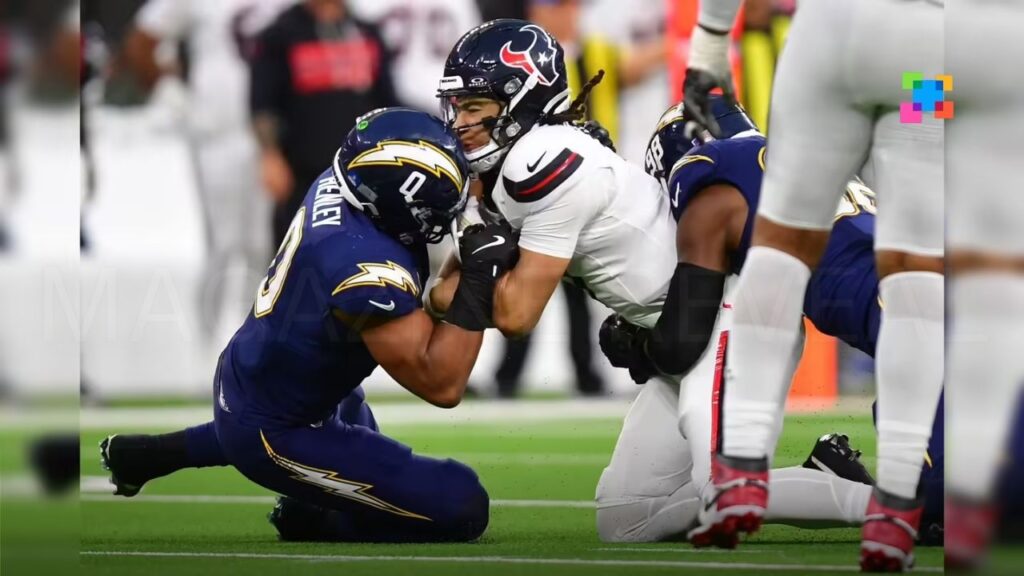
Several Houston Texans players stood out with impactful performances. Quarterback efficiency was key, completing 16 of 28 passes for 244 yards and two interceptions, demonstrating precision and control. Their rushing attack gained 118 yards over 34 attempts, showing versatility in moving the ball on the ground. Key receivers contributed critical yardage, helping sustain scoring drives and convert third downs. Defensive players were equally important, generating two interceptions that disrupted Chargers’ attempts and shifted momentum. Houston’s balanced attack allowed multiple players to shine, creating depth in both offense and defense.
For the Chargers, quarterback execution yielded 201 passing yards on 21 completions out of 32 attempts. Their rushing game contributed 74 yards across 22 attempts, insufficient to complement the passing attack. Several receivers and running backs made notable plays, keeping drives alive and generating scoring opportunities. On defense, five sacks were recorded, but turnovers and penalties limited their impact. While the Chargers demonstrated individual talent, the lack of cohesive execution under pressure ultimately influenced the outcome. These individual stats reveal how player performance can drive or hinder overall team success.
Offensive Strategy and Play Execution
Houston Texans’ offensive strategy focused on balance between passing and rushing, exploiting weaknesses in the Chargers’ defensive setup. Early scoring drives relied on quick passes and controlled rushes, limiting defensive reaction time. By maintaining efficiency in yards per play (5.8) and executing precise plays in the red zone, the Texans maximized scoring potential. Play-calling adjustments, particularly in the second half, allowed the team to maintain possession and control tempo, preventing the Chargers from mounting a complete comeback.
The Chargers leaned heavily on passing schemes to advance yardage, averaging 5.4 yards per play. While third-quarter adjustments led to 16 points, inefficiencies in the first half and red-zone struggles hampered overall execution. Rushing attempts lacked sufficient gains, limiting versatility and predictability. Offensive coordination faltered under pressure, with incomplete passes and turnovers disrupting momentum. The match underscored the importance of balanced offensive execution, where effective rushing complements passing to maintain consistent scoring opportunities.
Defensive Impact and Key Stops
The Texans’ defense played a decisive role in the 20-16 victory, effectively neutralizing the Chargers’ scoring threats. Their aggressive pass defense generated two key interceptions, while strategic positioning and pressure limited quarterback options. Houston’s defensive line maintained containment, minimizing rushing yardage to 74 yards and preventing large gain plays. Effective tackling and disciplined coverage contributed to a strong third-down conversion defense, forcing the Chargers into long, difficult drives.
For the Chargers, defensive efforts included five sacks and multiple tackles for loss, but they failed to prevent Houston’s sustained drives. Key stops in the third quarter allowed them to close the score gap, but overall defensive consistency was lacking. Missed tackles and susceptibility to short, high-percentage passes enabled Houston to maintain possession and control the clock. The game highlighted how small defensive lapses can impact final outcomes, emphasizing the need for precise execution under competitive pressure.
Special Teams Performance
Special teams played a subtle but critical role in field position and momentum. Both teams executed punts, kickoffs, and field goals consistently, with Houston converting scoring opportunities while limiting Chargers’ gains. Coverage units maintained discipline, ensuring minimal yardage on returns and effectively forcing strategic play. While no touchdowns were scored via special teams, reliable execution contributed to overall game control and allowed offensive units to perform efficiently.
Kickoff and punt efficiency also affected possession dynamics. Chargers’ special teams executed returns that gained modest yardage, but missed opportunities limited their ability to shift momentum. Houston leveraged strategic placements to control field position, forcing the Chargers to start deeper in their own territory. The consistent, disciplined performance of special teams emphasized their importance in close contests, often providing a subtle yet decisive advantage.
Post-Match Analysis and Implications
The Houston Texans’ 20-16 victory over the Los Angeles Chargers carries significant implications for playoff standings and team morale. Early scoring dominance and consistent offensive execution demonstrated Houston’s ability to perform under pressure. Their defensive discipline, particularly in forcing turnovers and limiting the Chargers’ red-zone efficiency, highlights a team prepared for high-stakes matchups. The Texans’ win reinforces confidence in both offensive and defensive schemes, providing coaching staff with actionable insights on strategies that successfully neutralize opponents’ strengths.
For the Chargers, the narrow loss emphasizes the importance of red-zone efficiency and minimizing turnovers. While individual players showed talent, the team must improve cohesive execution under pressure to convert yards into points consistently. Late-game rallies showcased resilience, but inconsistent early-game performance ultimately determined the outcome. Both teams can draw lessons from this contest: Houston for refining strengths, and Los Angeles for addressing execution gaps. The result may influence tactical decisions, roster management, and preparation for upcoming playoff battles, shaping the remainder of the season.
Conclusion
The 27 Dec 2025 matchup between the Houston Texans and Los Angeles Chargers was a display of competitive NFL football, highlighting strategy, execution, and resilience. Houston’s early lead, balanced offensive approach, and opportunistic defense proved decisive in a closely contested game. Chargers’ late-game efforts demonstrated adaptability, though inefficiencies and missed opportunities limited their scoring potential. The match reinforced the impact of execution under pressure and the value of balanced gameplay across all units.
Ultimately, this game serves as a case study in how disciplined planning, strategic play-calling, and strong individual performances influence final outcomes. Houston’s victory showcased teamwork, preparation, and the ability to seize key moments, while Los Angeles highlighted areas for improvement. Fans witnessed a match where every play mattered, setting the stage for thrilling end-of-season matchups. The outcome will resonate in playoff positioning, team morale, and tactical adjustments for both squads.
Frequently Asked Questions
What was the final score of the Chargers vs Texans match on 27 Dec 2025?
Houston Texans won the match 20-16 against the Los Angeles Chargers, maintaining an early lead and defending successfully in the final quarter.
Who were the standout players in the match?
For Houston, the quarterback, key receivers, and rushing backs were pivotal, contributing to 244 passing yards and 118 rushing yards. For the Chargers, the quarterback and receivers led passing efforts but lacked complementary rushing support.
How did the Texans’ defense impact the game?
Houston’s defense forced two interceptions, limited Chargers’ rushing yards to 74, and maintained strong coverage on third downs, preventing critical scoring drives.
What were the key stats that determined the outcome?
Houston gained 362 total yards compared to the Chargers’ 275, with better third-down conversions in critical situations. Penalties were managed effectively, and turnovers favored Houston.
How did special teams influence the game?
While no touchdowns were scored by special teams, disciplined punts, kickoffs, and coverage maintained favorable field positions, supporting offensive efficiency.
VISIT MORE: MAGAZINE REVEAL