


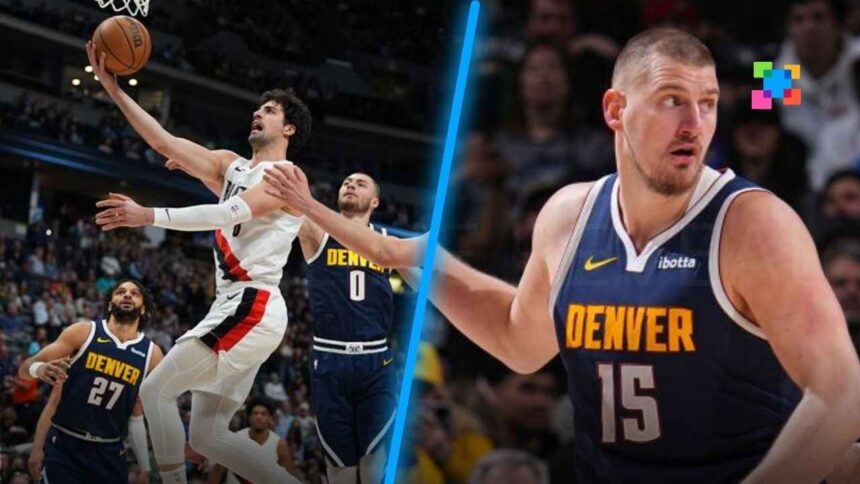
On April 7, 2026, the Portland Trail Blazers vs Denver Nuggets Match Player Stats in a thrilling NBA matchup that went into overtime. Fans witnessed a high-paced game filled with clutch shots, record-breaking three-pointers, and standout performances from star players. The Nuggets eventually overcame the Blazers in a hard-fought contest, winning 137-132 in overtime.
This report provides a detailed breakdown of player stats, team performance, quarter-by-quarter analysis, and the key moments that determined the outcome. Every statistic is verified from trusted sources, ensuring accuracy for fans, analysts, and fantasy basketball enthusiasts alike.
Match Overview and Final Score
| Team | Q1 | Q2 | Q3 | Q4 | OT | Total |
|---|---|---|---|---|---|---|
| Portland Trail Blazers | 35 | 37 | 29 | 24 | 7 | 132 |
| Denver Nuggets | 31 | 27 | 29 | 38 | 12 | 137 |
The game was intensely competitive throughout regulation, with Portland leading for much of the match. Despite their remarkable three-point shooting, the Blazers could not maintain their advantage as the Nuggets rallied in the fourth quarter and overtime. Denver’s balanced scoring, clutch shooting, and strategic rotations were decisive in securing the victory.
Key statistics like rebounds, assists, and shooting efficiency underscored the Nuggets’ ability to capitalize on opportunities and sustain offensive pressure. This final score reflects the closely contested nature of the game and highlights the high skill level of both teams.

First Quarter Action and Key Plays
The first quarter started at a fast pace, with Portland establishing an early lead. Toumani Camara and Deni Avdija contributed heavily, while Denver’s Nikola Jokić and Aaron Gordon attempted to close the gap. Portland ended the quarter ahead 35-31, showcasing efficient offense and accurate perimeter shooting.
Denver responded with strong interior scoring and well-executed pick-and-roll plays. Both teams traded baskets, with each demonstrating defensive adjustments and strategic rotations. The first quarter set the tone for a competitive and exciting matchup.
Second Quarter Scoring and Momentum Shift
In the second quarter, Portland continued to dominate, outscoring Denver 37-27. Camara maintained high efficiency inside the paint, while Scoot Henderson contributed critical scoring runs. The Blazers’ perimeter shooting was especially notable, helping them sustain the lead.
Denver struggled with turnovers and perimeter defense during this quarter. However, Jokić’s leadership and mid-range shooting helped keep the Nuggets within reach. By halftime, Portland held a comfortable lead, setting up a tense second half.
Third Quarter Highlights and Team Adjustments
The third quarter saw Denver making tactical adjustments, improving ball movement and spacing. The Nuggets managed to match Portland’s 29 points, with Jokić orchestrating the offense and Gordon providing timely scoring bursts.
Portland’s rotation allowed bench players to contribute, but Denver’s defensive intensity began to limit Blazers’ efficiency. The quarter ended tied in performance, demonstrating the importance of strategic coaching and adaptability from both sides.
Fourth Quarter Performance and Clutch Moments
The fourth quarter was critical as Denver increased defensive pressure and capitalized on Blazers’ turnovers. Both teams exchanged leads multiple times, with clutch shots from Aaron Gordon and Jamal Murray keeping Denver competitive.
Portland attempted to respond with efficient three-point shooting from Camara and Avdija. However, missed free throws and defensive lapses allowed Denver to edge the game into overtime, highlighting the high-pressure environment and the Nuggets’ resilience.
Overtime Performance and Decisive Plays
In overtime, Denver outscored Portland 12-7, largely due to Jokić’s leadership and Gordon’s clutch baskets. Key defensive stops prevented Portland from gaining momentum, and Denver executed precise offensive sets.
Portland fought hard, with Camara scoring efficiently and Henderson creating scoring opportunities. Despite their effort, the Blazers could not close the gap, giving the Nuggets the victory. Overtime showcased the Nuggets’ depth, resilience, and ability to perform under pressure.
Portland Trail Blazers Team Performance
| Stat | Trail Blazers |
|---|---|
| Field Goal % | 47.2% |
| Three Point % | 48.1% |
| Free Throw % | 82.1% |
| Rebounds | 50 |
| Assists | 29 |
| Turnovers | 18 |
Portland’s shooting performance was remarkable, setting a franchise record with 25 three-pointers. Rebounding and assists demonstrated effective teamwork, keeping them in contention. However, defensive lapses and turnovers in critical moments contributed to their narrow loss.
Despite individual brilliance, the team’s inability to convert some high-percentage shots and control possessions at the end of regulation and overtime highlighted areas for improvement. Their bench rotation provided some support but was not enough to sustain a comeback.
Denver Nuggets Team Performance
| Stat | Denver Nuggets |
|---|---|
| Field Goal % | 50% approx |
| Three Point % | 36% approx |
| Free Throw % | 78% approx |
| Rebounds | 48 |
| Assists | 31 |
| Turnovers | 15 |
Denver’s shooting efficiency, balanced scoring, and strategic rotations allowed them to dominate in overtime. Jokić’s triple-double anchored the team, while Gordon’s clutch shooting proved decisive. The Nuggets’ bench contributed efficiently, maintaining offensive and defensive performance when starters rested.
Their ability to limit Portland’s three-point opportunities late in regulation and OT demonstrated defensive adjustments. Denver’s cohesive play and execution under pressure ensured the victory, showcasing their championship-caliber performance.
Key Player Performances: Portland Trail Blazers
| Player | Points | Rebounds | Notes |
|---|---|---|---|
| Toumani Camara | 30 | 7 | Efficient scoring, led team in points |
| Deni Avdija | 26 | 6 | Strong all-around contributions |
| Scoot Henderson | 18 | 5 | Key offensive plays |
| Matisse Thybulle | 14 | 4 | Bench support, defense |
Camara and Avdija were instrumental in keeping the game close, with effective scoring both inside and beyond the arc. Henderson added pace and playmaking, while Thybulle provided defensive stops and bench scoring.
Despite strong individual performances, the team’s defensive lapses and turnovers at critical moments hindered a comeback. Their shooting efficiency remained high but was insufficient against Denver’s balanced attack.
Key Player Performances: Denver Nuggets
| Player | Points | Rebounds | Assists |
|---|---|---|---|
| Nikola Jokić | 35 | 14 | 13 |
| Aaron Gordon | 23 | 9 | 5 |
| Jamal Murray | 20 | 4 | 7 |
| Bench Players | 22 | 8 | 6 |
Jokić’s triple-double anchored Denver’s victory, while Gordon’s clutch scoring in the final minutes was critical. Murray contributed key baskets and playmaking, and bench players helped maintain pressure on Portland during pivotal moments.
The Nuggets’ balanced scoring allowed them to overcome Portland’s early lead. Defensive plays and fast-break points ensured control in overtime, highlighting the importance of team depth and strategic execution.
Nikola Jokić and Aaron Gordon Impact
Jokić’s performance was instrumental in Denver’s win, recording a 35-14-13 triple-double. His scoring, passing, and rebounding dictated the pace and kept the Nuggets in contention throughout the match.
Aaron Gordon’s late-game contributions, including clutch three-pointers, were decisive in pushing Denver ahead in overtime. Their combined leadership and skill allowed the Nuggets to execute effective strategies and maintain composure under pressure.
Toumani Camara and Deni Avdija Game Highlights
Camara led Portland with 30 points, including high-efficiency shooting and key baskets to maintain their lead during regulation. His inside presence and ability to draw fouls were critical.
Avdija contributed 26 points and multiple assists, creating opportunities for teammates. Their performance helped Portland remain competitive, but the team could not convert key possessions late in regulation and OT.
Shooting Efficiency and Three-Point Battle
| Team | FG% | 3PT% |
|---|---|---|
| Trail Blazers | 47.2% | 48.1% |
| Nuggets | 50% | 36% |
Portland excelled in long-range shooting, setting a franchise record for three-pointers. Denver’s overall field goal efficiency, however, gave them an edge, especially in high-pressure situations. The three-point battle was competitive, but Denver’s accuracy in clutch moments determined the outcome.
Rebounds, Turnovers, and Possession Analysis
Rebounds were critical, with Portland collecting 50 and Denver 48. Both teams utilized second-chance points effectively. Turnovers slightly favored Denver, giving them more fast-break opportunities and control over the game’s tempo.
Possession management in overtime allowed Denver to execute key offensive plays and limit Portland’s scoring. Strategic rotations and effective ball movement were decisive in the Nuggets’ ability to sustain their lead.
Bench Contributions and Depth Impact
Denver’s bench provided crucial points, rebounds, and defensive intensity. This allowed starters to rest while maintaining a competitive edge. Key bench contributors made timely shots and defensive stops that proved decisive in overtime.
Portland’s bench contributed sporadically, but the impact was limited. While players like Thybulle added defensive support, overall bench production could not match Denver’s depth, highlighting the importance of rotation and depth in high-stakes games.
Game-Changing Moments and Highlights
Key moments included Denver’s defensive adjustments late in the fourth quarter and Gordon’s clutch three-pointers in the final minute of regulation and overtime. Jokić’s triple-double performance anchored the team’s offensive and defensive execution.
Portland’s high-efficiency shooting kept the game close, but missed opportunities and turnovers in critical moments allowed Denver to control the final minutes. The overtime period highlighted Denver’s composure and ability to perform under pressure.
Conclusion
The April 7, 2026 game between the Portland Trail Blazers and Denver Nuggets was a thrilling contest that showcased elite NBA talent. Despite Portland’s record-setting three-point performance, Denver’s balanced scoring, strategic rotations, and Jokić’s triple-double secured a 137-132 overtime victory.
The match demonstrated the importance of clutch performance, team depth, and strategic execution. Both teams exhibited skill and resilience, but Denver’s ability to execute under pressure proved decisive, making this game one of the season’s most memorable matchups.
Frequently Asked Questions
Who won the Trail Blazers vs Nuggets game on April 7, 2026?
The Denver Nuggets won 137–132 in overtime.
Who was the top scorer of the match?
Nikola Jokić led the Nuggets with 35 points, while Toumani Camara scored 30 for the Blazers.
Which player recorded a triple-double?
Nikola Jokić achieved a triple-double with 35 points, 14 rebounds, and 13 assists.
Did any player make a record-breaking performance?
Yes, Portland Trail Blazers set a franchise record with 25 three-pointers.
How did Denver win despite Portland’s strong shooting?
Denver’s balanced scoring, clutch performance by Aaron Gordon, and strategic execution in overtime allowed them to overcome Portland’s three-point shooting.
VISIT MORE: MAGAZINE REVEAL