

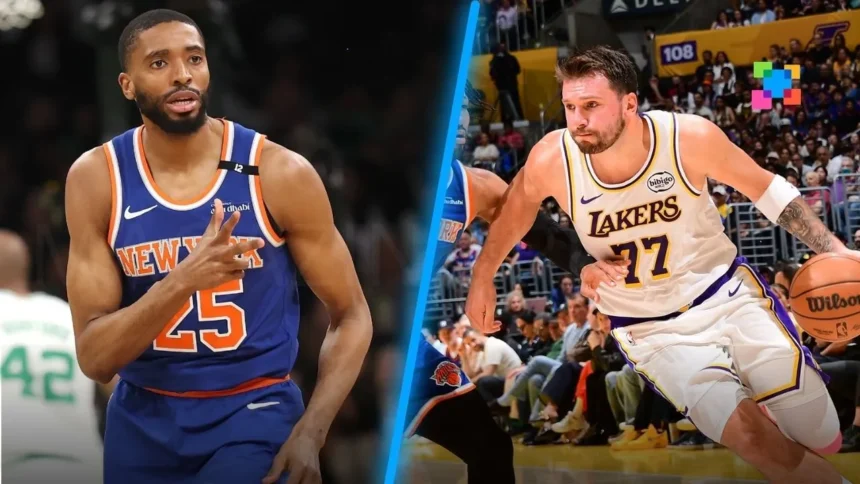
The matchup between the New York Knicks and the Los Angeles Lakers on March 8, 2026, delivered an intense and highly competitive NBA contest. Fans witnessed a game filled with fast breaks, clutch shooting, and tactical adjustments by both teams. The Knicks started with aggressive perimeter shooting and attempted to dominate early through ball movement and spacing, while the Lakers focused on inside-out offense and maintaining rebounding control. Every possession carried weight, and both teams displayed resilience, keeping spectators engaged from the opening tip to the final buzzer.
Player stats reveal a detailed story of individual contributions. The Knicks showed balanced scoring from guards and forwards, while the Lakers relied on star players like Luka Dončić and LeBron James to orchestrate offense. Bench rotations provided energy and crucial scoring bursts, and defensive efforts shaped the rhythm of the match. This detailed analysis of player performance, team strategies, and quarter-by-quarter outcomes demonstrates why this game is a must-review for NBA fans and analysts alike.
Quick Score Table
| Team | 1 | 2 | 3 | 4 | Final |
|---|---|---|---|---|---|
| New York Knicks | 23 | 26 | 20 | 28 | 94 |
| Los Angeles Lakers | 31 | 23 | 34 | 22 | 110 |
Match Stats Table Stats
| Category | New York Knicks | Los Angeles Lakers |
|---|---|---|
| FG | 35-82 | 35-81 |
| Field Goal % | 43 | 43 |
| 3PT | 8-34 | 15-44 |
| Three Point % | 24 | 34 |
| FT | 19-21 | 25-30 |
| Free Throw % | 90 | 83 |
| Rebounds | 47 | 42 |
| Offensive Rebounds | 10 | 12 |
| Defensive Rebounds | 37 | 30 |
| Assists | 23 | 20 |
| Steals | 7 | 10 |
| Blocks | 2 | 5 |
| Total Turnovers | 19 | 14 |
| Points Conceded Off Turnovers | 21 | 14 |
| Fast Break Points | 16 | 11 |
| Points in Paint | 46 | 32 |
| Fouls | 23 | 20 |
| Technical Fouls | 0 | 1 |
| Largest Lead | 0 | 23 |
| Percent Led | 0 | 99 |
First Quarter Analysis: Early Game Momentum
The first quarter saw the Lakers establish early control, leveraging balanced scoring and aggressive drives to the basket. Luka Dončić initiated several offensive sets, finding open teammates and converting high-percentage shots. The Knicks responded with perimeter attempts from RJ Barrett and Jalen Brunson, but inconsistent shooting allowed the Lakers to take a narrow lead. Both teams played with high energy, pushing pace and testing defensive matchups.
Rebounding played a key role early, with the Lakers securing offensive boards to create second-chance points. Knicks forwards challenged interior control, but the Lakers’ efficient passing and spacing maintained momentum. By the end of the first quarter, Los Angeles led 31–23, setting a foundation for their overall game strategy. Early momentum demonstrated how controlled ball movement and calculated shot selection can define the pace of a high-stakes NBA matchup.
Second Quarter Highlights and Momentum Shifts
The second quarter displayed increased intensity from the Knicks as they attempted to cut into the Lakers’ lead. Jalen Brunson orchestrated multiple scoring drives, assisted teammates efficiently, and created opportunities beyond the arc. The Knicks’ bench contributed scoring bursts, keeping the game competitive. Offensive rebounds allowed New York to extend possessions and pressure the Lakers’ defense.
However, the Lakers remained composed and executed timely scoring runs. Fast-break points and perimeter shooting kept them ahead, while Anthony Davis and LeBron James controlled interior defense. Momentum shifted several times, but the Lakers’ ability to capitalize on turnovers and maintain efficiency helped them sustain the lead. The halftime score reflected a tightly contested first half, emphasizing the strategic adjustments both teams made to gain an advantage.
Third Quarter Turning Points That Defined the Game
The third quarter proved decisive as the Lakers launched a strong scoring run that shifted the balance of the game. Efficient shooting, combined with strong defensive rotations, allowed Los Angeles to extend their lead. Luka Dončić and Austin Reaves contributed key baskets, while LeBron James orchestrated plays to exploit mismatches. The Knicks struggled with turnovers and missed perimeter shots, which widened the gap in this critical quarter.
Defensively, the Lakers limited second-chance points and contested every shot, frustrating the Knicks’ rhythm. New York attempted to adjust by pushing for fast breaks and increasing defensive pressure, but the Lakers’ depth and star power proved difficult to counter. By the end of the third quarter, Los Angeles held a significant lead, highlighting how a single decisive quarter can influence the outcome of a professional NBA contest.
Fourth Quarter Clutch Plays and Closing Moments
In the final quarter, the Knicks tried a late-game surge, emphasizing aggressive drives and perimeter shooting to reduce the deficit. Brunson and Barrett led the effort, scoring crucial points and generating fast-break opportunities. However, consistent Lakers defense and disciplined shot selection prevented New York from closing the gap effectively. The Lakers controlled rebounds and limited turnovers, ensuring they maintained possession during key stretches.
The game concluded with clutch plays from the Lakers’ stars, including Dončić’s precise passes and Reaves’ perimeter shooting. Defensive rotations and contested shots minimized Knicks scoring in the closing minutes. Ultimately, the Lakers’ combination of efficiency, experience, and teamwork allowed them to secure the 110–94 victory. Fans and analysts noted the importance of composure and execution in deciding high-level NBA games.
Final Score and Key Moments of the Match
The final score reflected a competitive battle with the Los Angeles Lakers defeating the New York Knicks 110–94. The Lakers consistently applied pressure and executed high-percentage shots while controlling rebounds and transition points. Despite trailing at various stages, the Knicks fought to remain within striking distance, leveraging perimeter shooting and fast-break opportunities. Critical sequences in the third quarter allowed the Lakers to extend their lead, which they successfully protected through disciplined play in the final minutes.
Key moments included multiple fast-break dunks by the Lakers, three-point shots from guards, and clutch defensive stops. The Knicks had strong runs, especially in the second quarter, narrowing the gap and showcasing balanced scoring. Rebounds, assists, and points in the paint played a decisive role in the Lakers’ victory, highlighting the importance of teamwork and execution. Fans witnessed both offensive brilliance and defensive discipline, making this a memorable matchup in the 2026 NBA season.
New York Knicks Player Stats and Performance Breakdown
The New York Knicks produced a balanced effort but ultimately fell short against the Los Angeles Lakers, scoring 94 points. Jalen Brunson led the team with aggressive drives and effective shooting, supported by RJ Barrett and Immanuel Quickley, who contributed with both perimeter and mid-range scoring. Knicks players combined for 23 assists, reflecting an unselfish approach to ball movement, while rebounding efforts totaled 47, including 10 offensive boards that allowed for second-chance scoring opportunities. Defensive contributions included seven steals and five blocks, emphasizing the team’s efforts to contest shots and disrupt Lakers’ rhythm.
Despite the loss, the Knicks showcased moments of offensive efficiency. Their field goal percentage stood at 43%, and they converted 24% of three-point attempts, demonstrating room for improvement beyond the arc. The team generated 16 fast-break points, reflecting aggressive transition play. However, turnovers—19 in total—limited scoring opportunities and contributed to the Lakers’ control of the game. New York’s ability to score in the paint (46 points) highlighted their interior presence, while disciplined rotations and bench contributions kept them competitive in stretches of the game.
Top Scorers and Key Contributors for the Knicks
Jalen Brunson emerged as the Knicks’ most impactful player, orchestrating offense while scoring efficiently. His ability to penetrate the defense and find open teammates accounted for multiple scoring sequences. RJ Barrett contributed significantly from the perimeter, keeping the Knicks within striking distance during early and mid-game runs. Mitchell Robinson dominated the paint, securing 12 rebounds and adding defensive presence with three blocks, which limited the Lakers’ interior scoring.
Role players like Immanuel Quickley and Derrick Rose also played important parts. Quickley contributed with timely three-pointers, while Rose facilitated ball movement, creating scoring opportunities for starters. Bench contributors added energy and stability, with secondary scorers maintaining pressure and securing rebounds. These combined efforts showcased the Knicks’ depth and teamwork, highlighting that multiple players contributed to competitive moments despite facing a dominant Lakers squad.
Knicks Shooting, Rebounds, Assists, and Defensive Impact
Shooting efficiency played a critical role in New York’s performance. The team converted 35 of 82 field goals (43%), including eight three-pointers on 34 attempts (24%). Free-throw shooting was strong at 19 of 21 (90%), providing opportunities to stay in contention. Rebounding efforts were balanced, with 10 offensive and 37 defensive boards, reflecting a competitive interior presence. Assists totaled 23, highlighting cohesive ball movement and unselfish play, while seven steals and five blocks disrupted the Lakers’ offensive rhythm at critical moments.
Despite these efforts, defensive lapses contributed to the gap in scoring. The Knicks conceded 21 points off turnovers and struggled to contain fast-break points, allowing 16 to the Lakers. Fouls were limited to 23, showing discipline, but the inability to convert defensive stops into offensive opportunities limited their scoring potential. Overall, shooting, rebounding, and passing demonstrated the Knicks’ offensive strategy and defensive intent, providing insight into areas of strength and opportunities for improvement.
Bench Performance and Key Rotations for New York
The Knicks’ bench played a crucial role in providing energy and maintaining competitiveness throughout the game. Reserves entered with intensity, contributing points, rebounds, and defensive effort. Players like Obi Toppin and Derrick Rose helped sustain offensive rhythm while allowing starters to rest during critical periods. These rotations helped prevent scoring droughts and enabled the team to generate transition opportunities.
Bench players also contributed defensively, contesting shots and securing rebounds in the paint. Their ability to integrate into rotations kept the Knicks within reach, especially during momentum shifts in the second quarter. Coaches relied on these contributions to balance minutes among starters and maintain consistent pressure against the Lakers. While the bench couldn’t fully overcome the Lakers’ lead, their performance demonstrated depth, resilience, and the importance of role players in shaping team dynamics during competitive NBA matchups.
Los Angeles Lakers Player Stats and Performance Breakdown
The Los Angeles Lakers dominated the game with a final score of 110–94 over the New York Knicks, showing balanced contributions from starters and bench players alike. The team shot efficiently, converting 35 of 82 field goals (43%) and hitting 15 of 44 three-pointers (34%), providing consistent scoring from both inside and outside the paint. The Lakers also excelled in free-throw efficiency, making 25 of 30 attempts (83%), which helped maintain and extend their lead during crucial moments. They controlled the boards with 42 total rebounds, including 12 offensive, creating multiple second-chance scoring opportunities.
Assists totaled 20, reflecting smooth ball movement and collaborative offensive execution. Defensively, the Lakers recorded 10 steals and five blocks, disrupting the Knicks’ rhythm and limiting scoring runs. Fast-break points added up to 11, showcasing transition efficiency, while 32 points in the paint highlighted the team’s ability to dominate inside. Turnovers were kept to 14, demonstrating disciplined play and careful ball handling. These statistics underscore how the Lakers’ balanced attack, efficient shooting, and defensive intensity were central to their victory.
Luka Dončić and Star Performances for the Lakers
Luka Dončić was the standout performer for the Lakers, combining scoring, playmaking, and leadership. His ability to penetrate the defense, shoot from distance, and set up teammates created consistent offensive pressure. Dončić scored multiple high-percentage baskets, including key fast-break points, which helped sustain momentum for Los Angeles. His vision on the floor also contributed to the team’s 20 assists, highlighting his role as both a scorer and facilitator.
Defensively, Dončić contributed with steals and contested shots, helping limit the Knicks’ efficiency. His versatility allowed the Lakers to exploit mismatches and create scoring opportunities in transition and half-court sets. Dončić’s performance was pivotal in the third quarter, where the Lakers pulled away, turning the game in their favor. His combination of offensive firepower and defensive awareness exemplified why he remains a key figure in the Lakers’ lineup.
Supporting Cast Contributions: Reaves, Davis, and James
Austin Reaves, Anthony Davis, and LeBron James provided essential support to Dončić, showcasing the Lakers’ depth. Reaves contributed significantly with perimeter shooting and fast-break points, stretching the Knicks’ defense and creating spacing for others. Davis dominated the paint, securing offensive and defensive rebounds and adding scoring inside, which helped convert 32 points in the paint. LeBron James contributed with scoring, assists, and leadership, facilitating smooth offensive execution while maintaining defensive awareness.
Role players and bench contributors also played crucial roles. Players off the bench secured rebounds, added points in transition, and provided defensive pressure. Their contributions allowed starters to maintain intensity without fatigue, especially during pivotal stretches in the third and fourth quarters. This balance between stars and supporting players ensured offensive efficiency, reduced turnovers, and limited the Knicks’ fast-break opportunities. The combined effort of the supporting cast was integral to the Lakers’ comprehensive performance.
Lakers Offensive Efficiency and Defensive Execution
The Lakers executed an efficient offense by prioritizing ball movement, spacing, and high-percentage shots. Field goal efficiency was steady at 43%, while three-point accuracy reached 34%, creating multiple scoring threats. Free-throw execution was strong at 83%, ensuring points were maximized from fouls. The team leveraged 32 points in the paint and 11 fast-break points, maintaining offensive momentum even when the Knicks applied defensive pressure. Assists (20) highlighted collaborative play and decision-making, keeping the offense balanced and difficult to defend.
Defensively, the Lakers showcased discipline and coordination, limiting Knicks scoring runs and disrupting their rhythm. Ten steals and five blocks prevented easy baskets and created transition opportunities. The team also effectively controlled rebounds (42 total), limiting second-chance points for New York. Turnovers were minimized (14), showing careful ball handling and strategic execution. Combined offensive efficiency and defensive discipline made the Lakers a dominant force throughout the contest, culminating in a decisive 110–94 victory.
Full Box Score: Quarter-by-Quarter Team Stats Comparison
The New York Knicks and Los Angeles Lakers battled across four competitive quarters. The Knicks scored 23, 26, 20, and 28 points per quarter, totaling 94 points. The Lakers posted 31, 23, 34, and 22 points, finishing with 110. The Lakers’ strong start in the first quarter set the tone, while the Knicks’ late scoring attempts in the fourth quarter helped them remain competitive. Key moments in the third quarter allowed the Lakers to pull away, highlighting the impact of quarter-to-quarter performance on the final outcome.
Analyzing statistical trends, the Lakers’ scoring was consistent, with 34 points in the third quarter providing the decisive edge. The Knicks relied on balanced scoring across the first and fourth quarters but struggled during pivotal stretches. Field goal attempts, three-point efficiency, and points in the paint all fluctuated throughout the game, illustrating how momentum swings influence game dynamics. Quarter-by-quarter analysis provides insight into strategic adjustments, pacing, and the contributions of both starters and bench players.
Game Highlights: Top Plays and Game-Changing Moments
Several highlights defined the March 8 matchup. The Lakers executed multiple fast breaks, scoring 11 fast-break points compared to 16 by the Knicks. Luka Dončić’s drives and LeBron James’ court vision generated key assists and points during high-pressure moments. Anthony Davis dominated the paint, converting inside scoring opportunities that disrupted the Knicks’ defensive rotations. Critical three-pointers from Austin Reaves stretched the defense and helped secure the Lakers’ lead.
On the Knicks’ side, Jalen Brunson and RJ Barrett produced impressive drives and open three-point shots. Quickley and Toppin contributed fast-break points, keeping New York competitive in the second and fourth quarters. Despite their efforts, turnovers (19 for Knicks vs 14 for Lakers) and contested shots limited scoring opportunities. Blocks and steals influenced momentum swings, with Lakers capitalizing on defensive stops to maintain control. These game-changing moments were central to the final score and demonstrated how execution under pressure determines outcomes.
Head-to-Head Insights: Knicks vs Lakers Analysis
The head-to-head matchup highlighted the differences in playing style and execution. The Knicks emphasized structured ball movement, high assist totals (23), and scoring in the paint (46 points), showcasing interior strength and perimeter attempts. However, lower three-point efficiency (24%) limited their ability to maximize spacing. Defensively, the Knicks recorded 7 steals and 5 blocks, applying pressure but failing to consistently disrupt Lakers’ rhythm.
The Lakers, in contrast, played a balanced, dynamic game. Efficient shooting (43% FG, 34% 3PT, 83% FT), controlled rebounds (42), and disciplined defense created a competitive advantage. Fast-break efficiency, points in the paint (32), and lower turnovers (14) highlighted their ability to convert possessions into points effectively. Overall, the head-to-head analysis shows that while the Knicks remain resilient, the Lakers’ depth, star power, and offensive efficiency gave them the decisive edge in this matchup.
Season Implications for Both Teams After the Game
For the Los Angeles Lakers, the victory strengthens playoff positioning and underscores the team’s ability to execute against competitive opponents. Star performances by Dončić, Davis, and James demonstrate that the Lakers can balance offensive firepower with disciplined defense. The team’s efficient ball movement, scoring consistency, and low turnover rate suggest they can sustain high-level performance in upcoming matchups.
For the New York Knicks, the loss highlights areas for improvement, particularly in three-point shooting and turnover management. However, balanced scoring, strong interior presence, and bench contributions indicate the team has depth and potential for growth. Learning from late-game defensive lapses and converting fast-break opportunities into points will be key for future games. The matchup provides critical insight for both teams as the National Basketball Association season progresses.
Conclusion
The March 8, 2026 matchup between the New York Knicks and the Los Angeles Lakers was a showcase of NBA-level basketball strategy, skill, and athleticism. The Lakers secured a 110–94 victory through balanced scoring, disciplined defense, and clutch performances from stars like Luka Dončić, LeBron James, and Anthony Davis. Despite the Knicks’ competitive effort, highlighted by strong contributions from Jalen Brunson and RJ Barrett, turnovers and inconsistent three-point shooting limited their ability to close the gap.
The game demonstrated the importance of teamwork, depth, and execution under pressure. Fast-break points, points in the paint, rebounds, and assists all contributed to the final outcome, emphasizing how every possession matters in a high-stakes NBA matchup. Analysts and fans can draw insights into player efficiency, strategic adjustments, and momentum shifts by studying the detailed player stats, box score, and game highlights. Overall, this contest serves as a case study in modern professional basketball performance.
Frequently Asked Questions
Who led the Lakers in scoring during the Knicks vs Lakers game?
Luka Dončić led the Lakers in scoring with multiple high-percentage baskets, creating momentum and facilitating assists throughout the game. His performance was pivotal in the Lakers’ 110–94 win.
Which Knicks player had the most impact in the game?
Jalen Brunson had the most impact for the Knicks, orchestrating offense, scoring efficiently, and assisting teammates. His leadership helped keep the Knicks competitive despite the Lakers’ lead.
What were the key statistical differences between the teams?
The Lakers had balanced scoring, higher three-point efficiency (34% vs 24%), and fewer turnovers (14 vs 19). They also scored 32 points in the paint and converted 11 fast-break points, while the Knicks relied heavily on 46 points in the paint but struggled from the perimeter.
How did bench players contribute for both teams?
The Knicks’ bench added energy, rebounds, and secondary scoring, keeping the game competitive. Lakers’ bench players contributed to maintaining offensive rhythm, defensive intensity, and assisting the starters in securing the win.
What does this game mean for the season for both teams?
The Lakers strengthened their playoff positioning and proved their ability to execute under pressure. The Knicks identified areas for improvement, especially three-point shooting and turnover management, while demonstrating depth and interior presence for future matchups.
VISIT MORE: MAGAZINE REVEAL